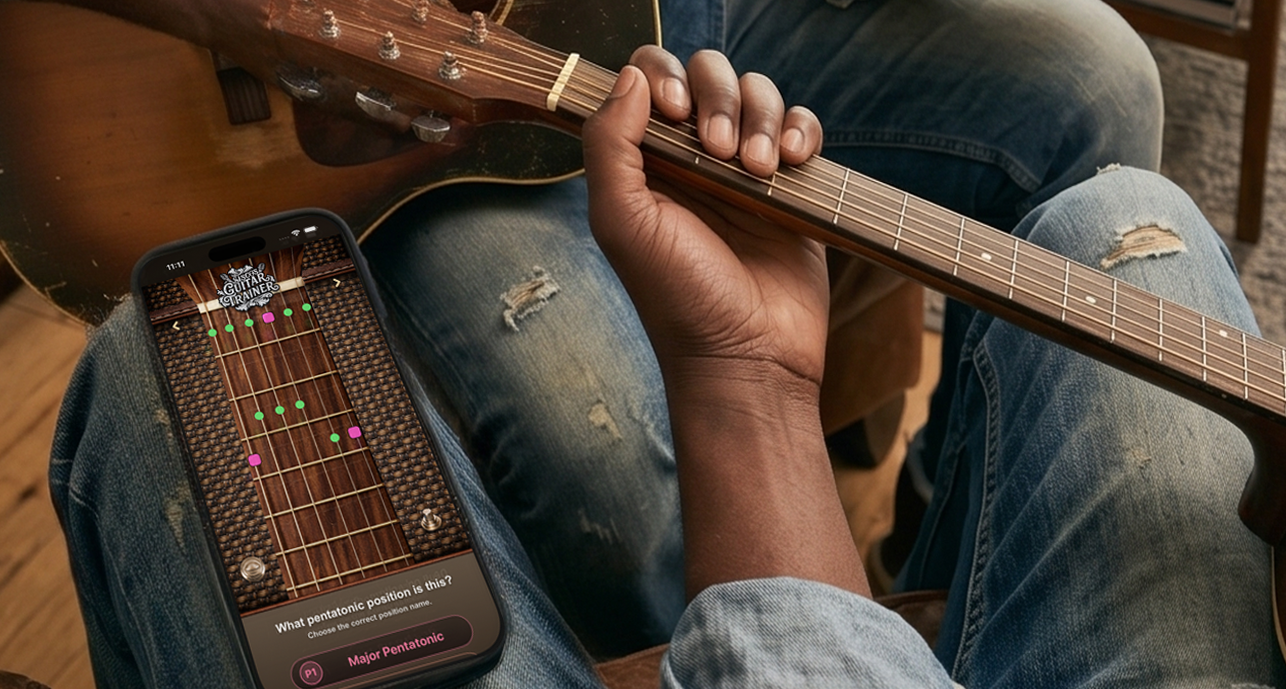
Fretboard training
Modes, roots, scale degrees, pentatonic and diatonic shapes, pattern recognition, and visual repetition built for guitarists who want to solo with more confidence.
Live App Store App / Music Education
A native iPhone and iPad guitar-learning app for fretboard patterns, scale movement, live note matching, and AR-assisted practice.
App Store Product
Sisco's Guitar Trainer is a live SwiftUI learning app that helps guitarists understand scale patterns, root movement, modes, chord degrees, and physical fretboard movement. It combines music-theory exercises, interactive fretboard recognition, live microphone pitch recognition, camera-based finger practice, and AR exploration in one focused training environment.
I started the project because I was working on my own guitar chops and wanted a better way to practice modes, root notes, scale degrees, and how those sounds relate to chords. The first version began as an HTML5 prototype built with AI-assisted iteration, then grew into a native iPhone and iPad app with modes, roots, degrees, AR trainer, ScaleMatch, three-string isolation, settings, and product artwork.
Modes, roots, scale degrees, pentatonic and diatonic shapes, pattern recognition, and visual repetition built for guitarists who want to solo with more confidence.
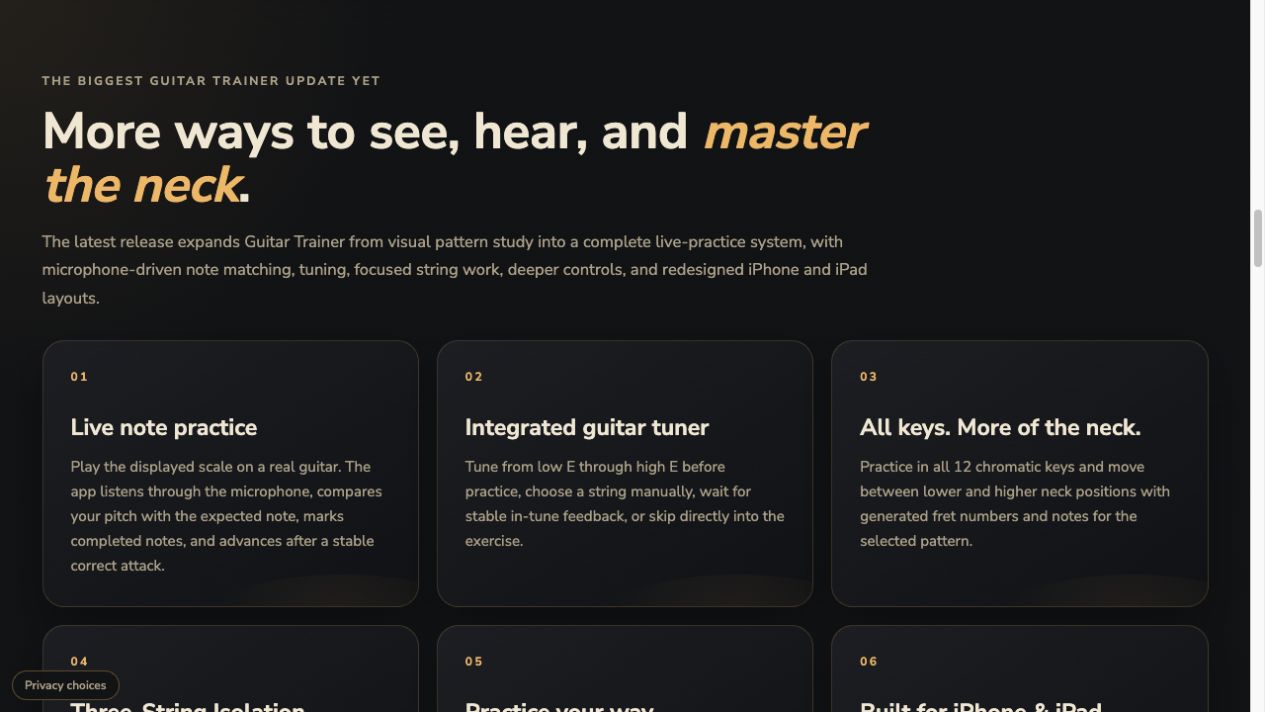
ScaleMatch note matching, live pitch recognition, three-string isolation, looped practice, arpeggio training, and an integrated tuner for real instrument work.
Camera-based hand interaction and AR guitar training concepts connect visual learning with finger memory and physical playing technique.
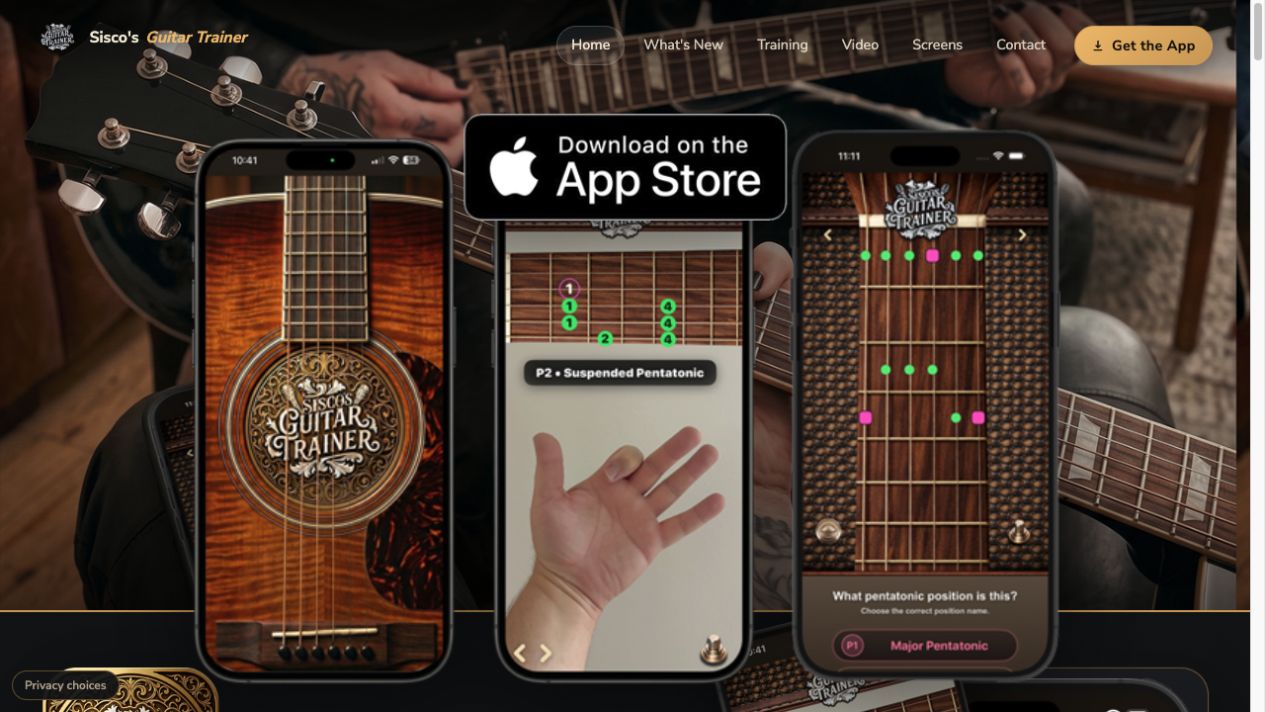
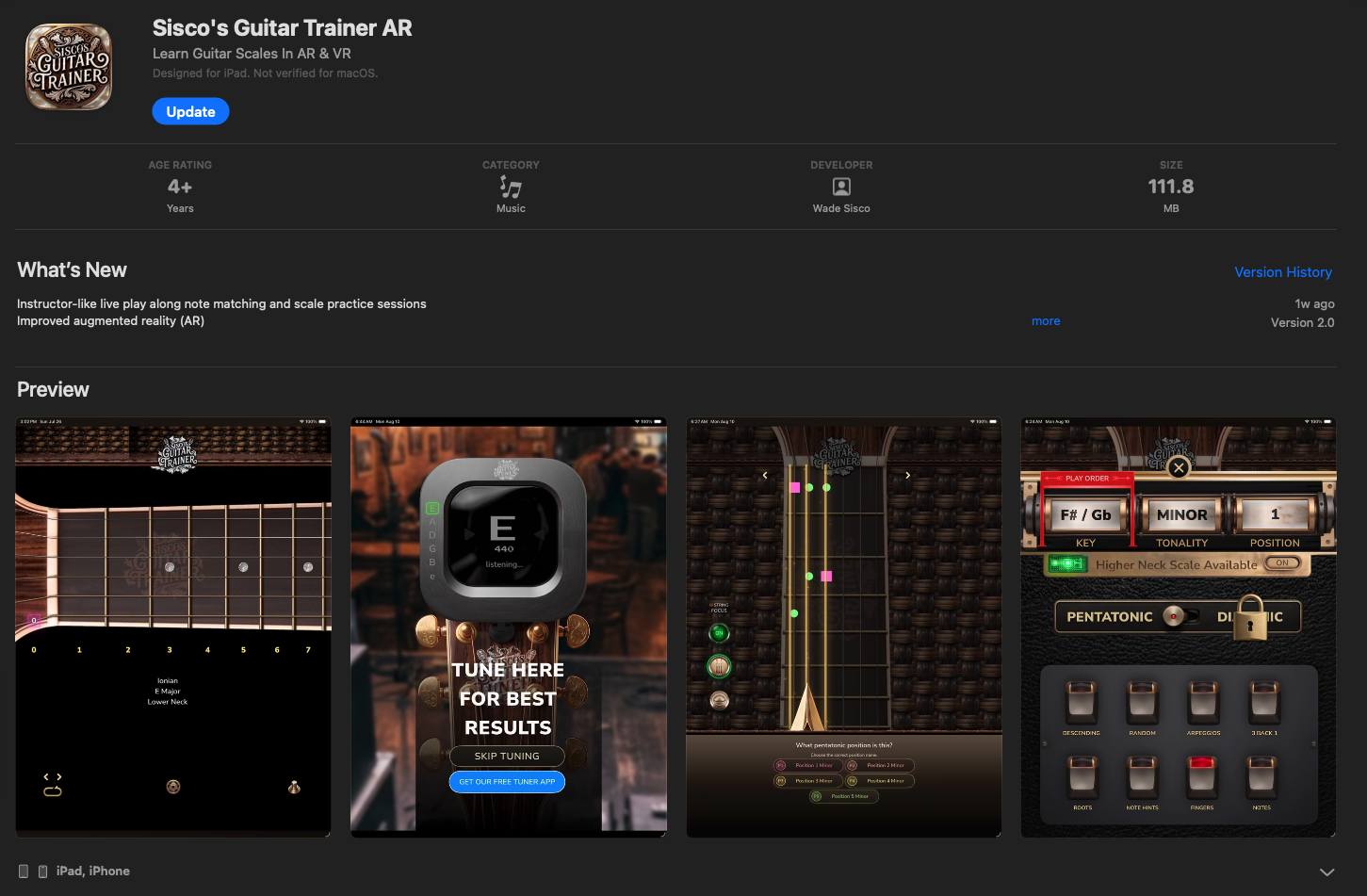
Apple App Store
Current Apple App Store presentation for Sisco's Guitar Trainer AR, showing the live release information, what's new notes, preview images, category, developer, and size.
Design process
The biggest challenge was teaching the AI the difference between scale patterns, root‑note positions, interval logic, and the way guitar players think visually across the neck. That became a prompt‑design problem as much as a UI problem.
Modes, root notes, and scale‑degree practice were shaped into focused learning modules with clear answer states.
Color, finger‑number cues, and feedback states helped the trainer feel more active than a static chart.
A scale builder helped define scales, chart notes, and map degrees across the fretboard for rapid logic testing.
Native iOS opened the door to ARKit, camera tracking, depth sensing, and overlays connected to the physical instrument.
Outcome
From a UI/UX perspective, the project became a full design system: guitar textures, leather panels, gold controls, bright answer states, finger‑number cues, drawer navigation, trainer modes, settings, and AR views all had to feel connected. It shows how I use AI, design judgment, iteration, and product thinking together to turn a rough idea into a polished interactive experience.
Drawer controls and mode switching created a flexible structure for multiple trainer states.
Interface textures, color states, and instrument‑inspired controls helped give the product a distinct identity.
Calibration screens and QA passes turned experimental AR and fretboard ideas into repeatable product behavior.
The case study shows the full arc from personal learning need to AI prototype to native iOS product direction.
Product Screens
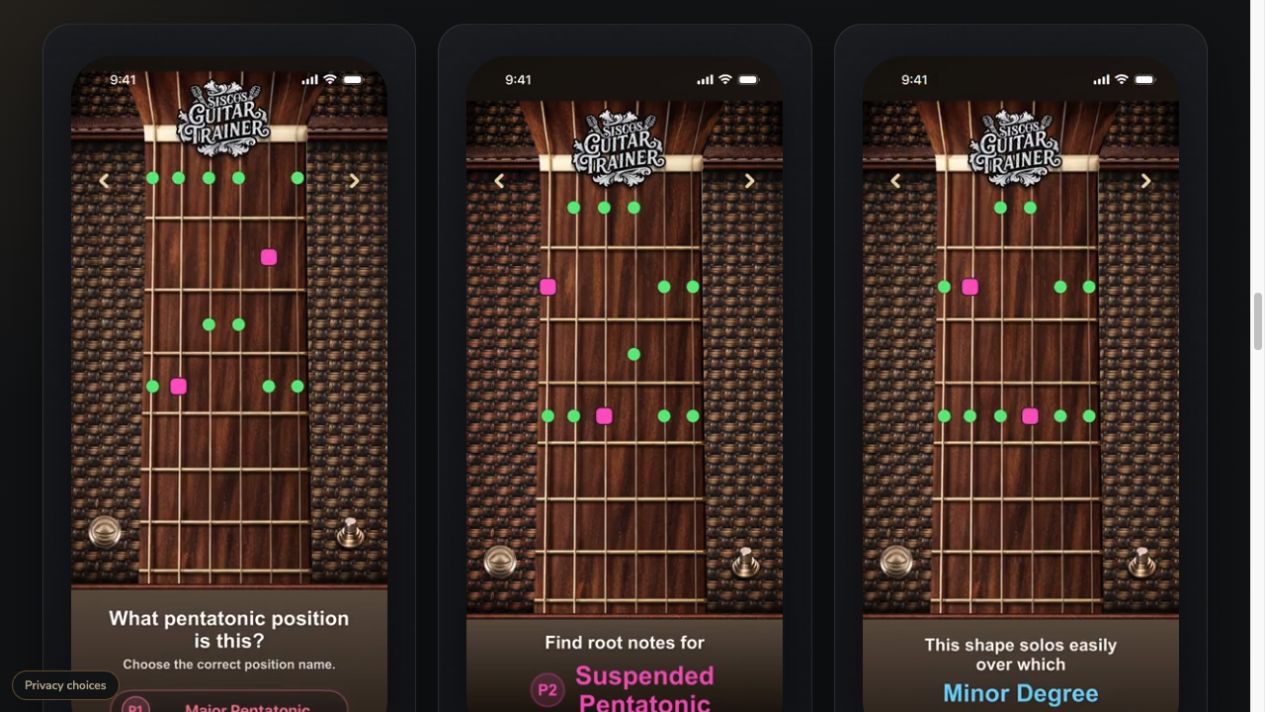
Current iPhone and iPad captures for the live Guitar Trainer app, showing AR settings, modes gameplay, roots, Note Match, three-string isolation, and the integrated tuner experience.
iPhone settings for tonal orientation, play order, practice options, and AR behavior.
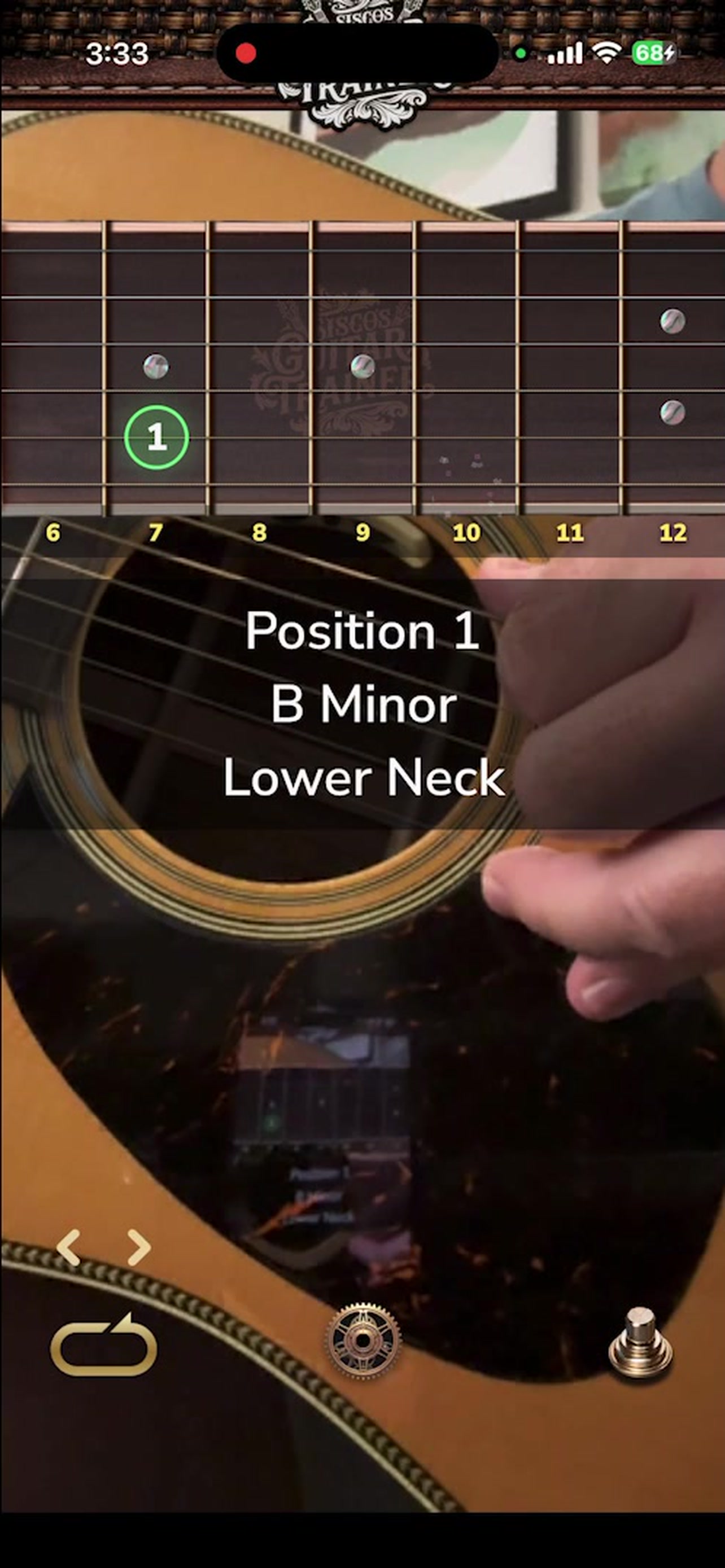
Camera-based practice screen with finger target and fretboard overlay.
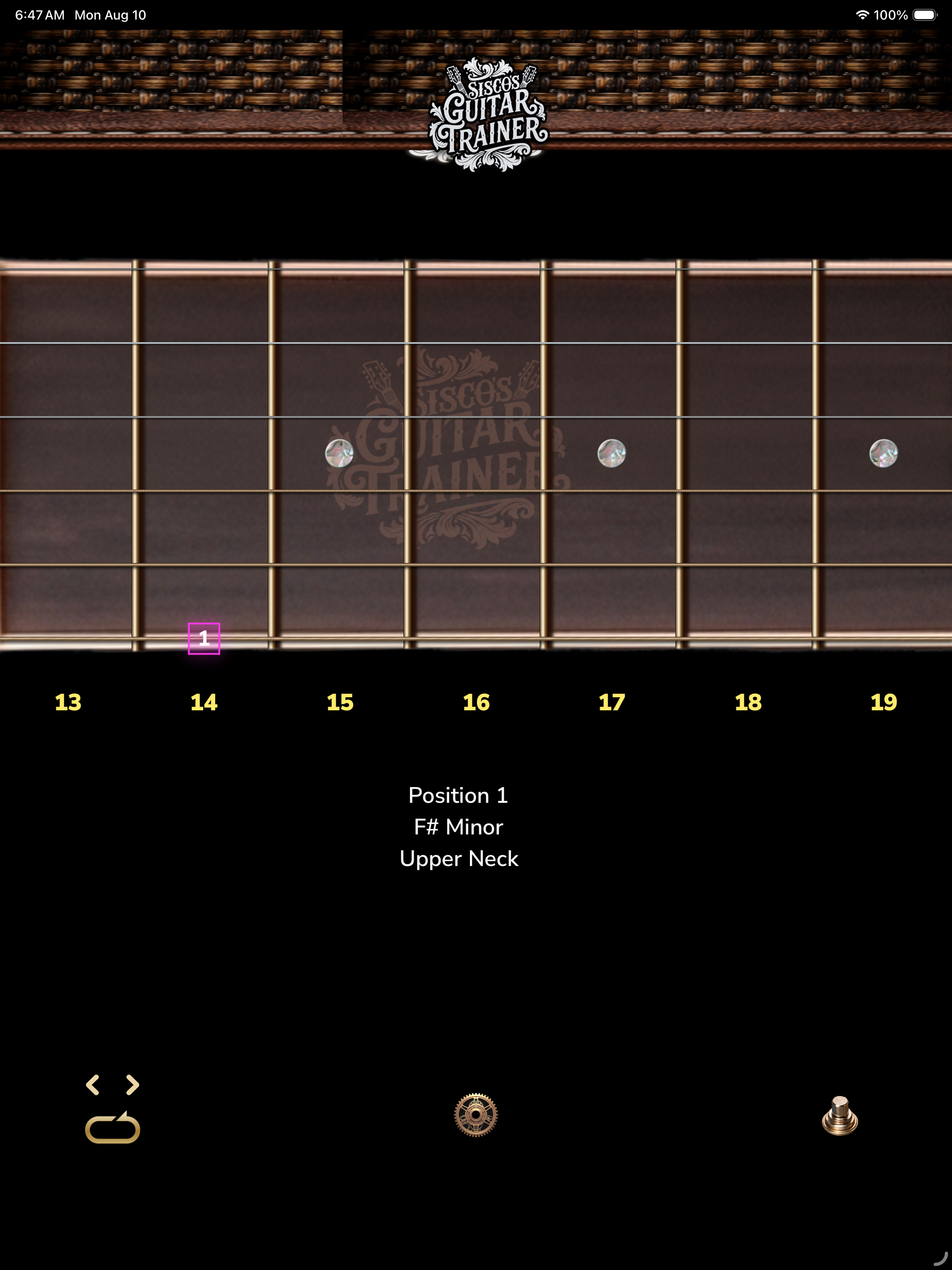
Progressive finger-position practice with completed-note feedback.
Physical guitar practice view tying fretboard positions to real movement.
Focused practice mode that narrows patterns to adjacent string groups.
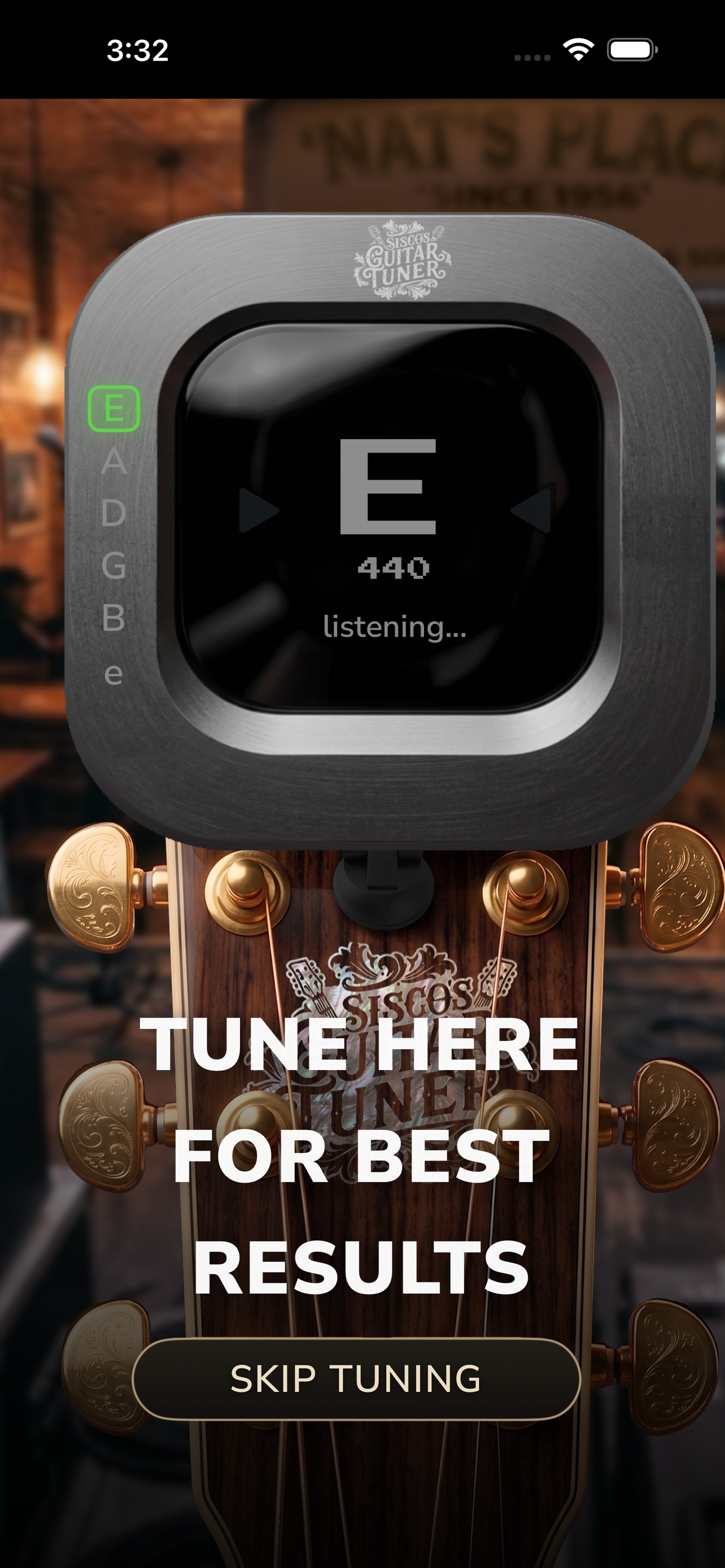
ScaleMatch tuning step before live pitch-recognition practice begins.
Expanded settings surface for AR trainer and ScaleMatch practice modes.
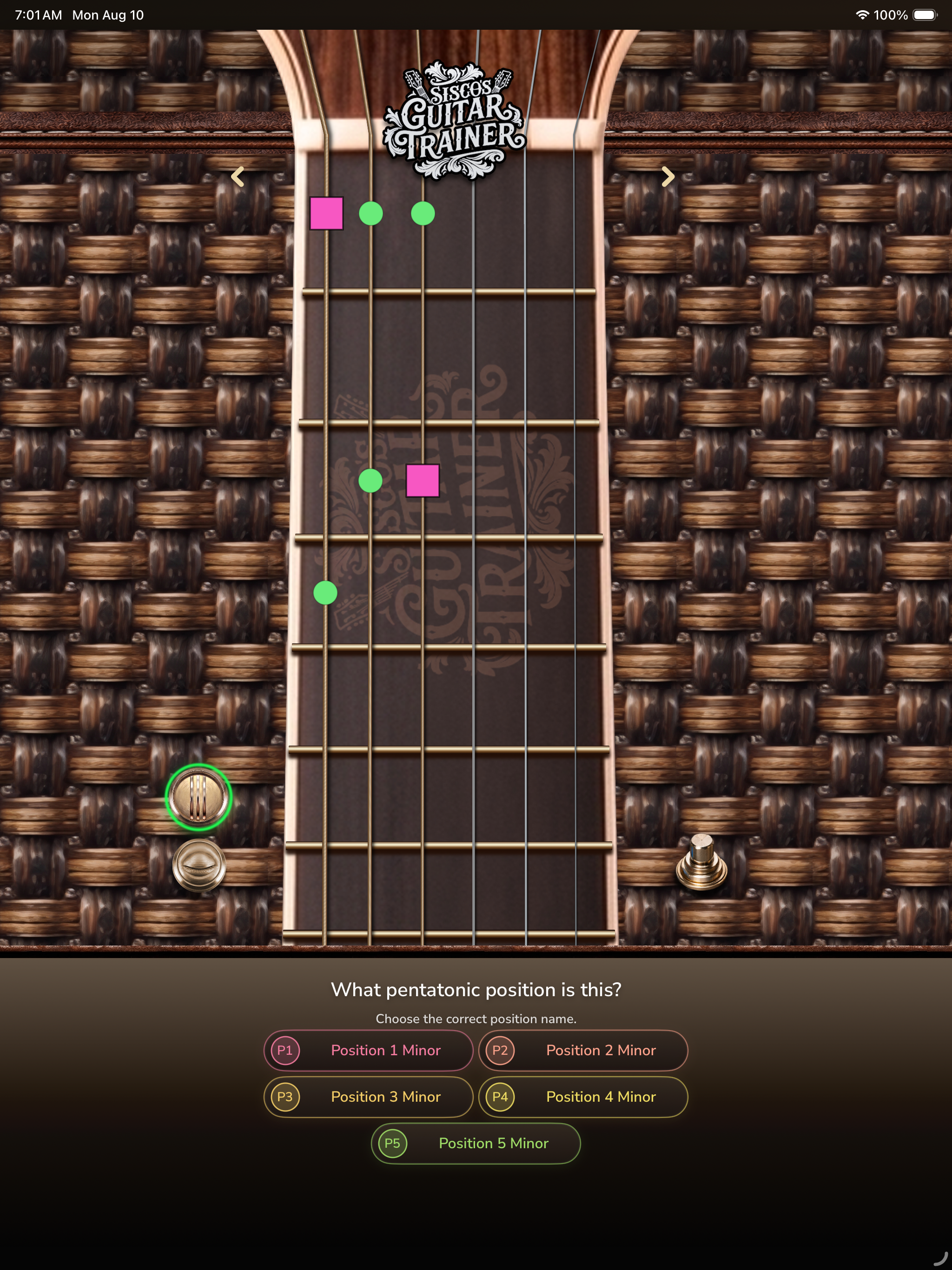
Pattern recognition quiz for modes and pentatonic positions.
Practice configuration for pattern families, order, tonal orientation, and hints.
Live pitch-recognition practice with target notes and fretboard feedback.
Root-note identification exercise for understanding each pattern's tonal center.
Tablet layout for narrowing the neck to three adjacent strings.
Integrated tuner step for preparing the guitar before ScaleMatch practice.