I started Sisco’s Guitar Trainer because I was working on my own guitar chops and wanted a better way to practice modes, root notes, scale degrees, and how those sounds relate to chords. I could find plenty of static charts, but I wanted something more active: a trainer that would show the fretboard, ask me questions, reveal answers, and help connect pattern recognition to real musical decision-making.
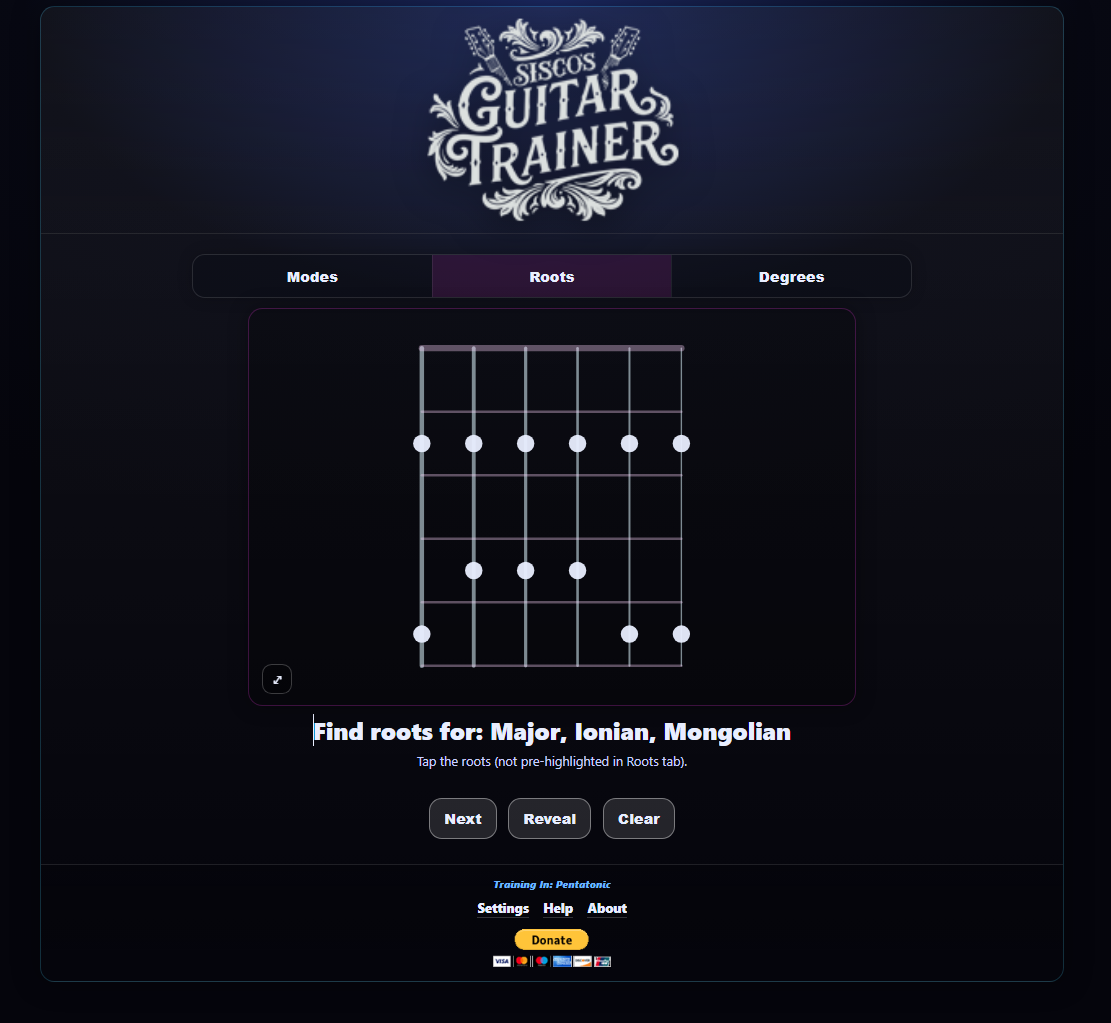
The first version began as an HTML5 web app that I vibe coded from scratch with AI. I used prompt engineering, fast UI iteration, and a lot of visual direction to turn rough ideas into working screens. The process felt close to sketching a layout, describing the interaction, and then refining the generated code until it behaved like the tool I had in my head. I built early trainer views for modes, root notes, and scale-degree practice, then kept adjusting the interface around what felt useful while actually playing guitar.
The biggest challenge was teaching the AI the difference between scale patterns, root-note positions, interval logic, and the way guitar players think visually across the neck. That became a prompt-design problem as much as a UI problem. I had to get very specific about pattern data, note relationships, color states, and answer behavior. The more precise the prompts became, the better the product became. That process taught me how to guide AI as a creative and technical collaborator instead of treating it like a one-shot code generator.
One important part of the web prototype was a scale builder tool. I wanted a way to manually define scales, chart their notes, and map degrees across the fretboard. That tool helped me test the underlying logic and gave me a faster way to experiment with new scale ideas. It also became a good example of how AI-assisted development can move from concept to internal tooling quickly when the design goal is clear.
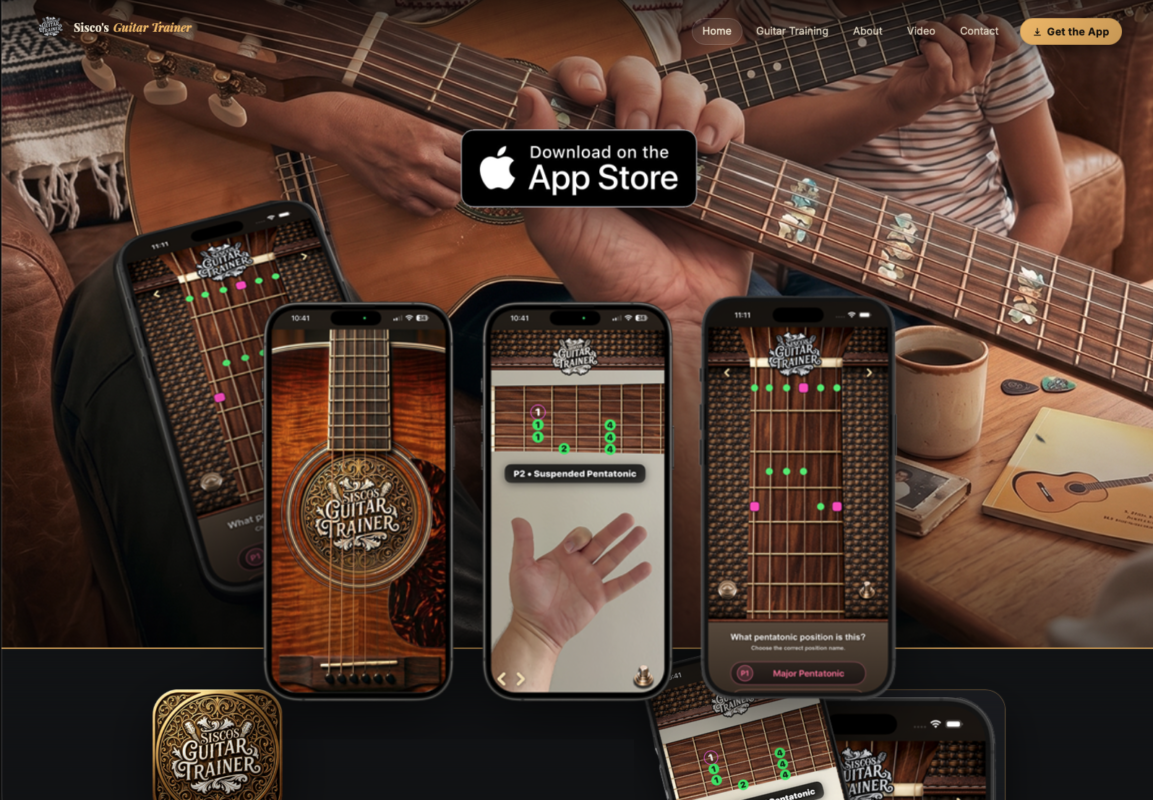
After the HTML5 version proved the core experience, I moved the project into native iOS development. The reason was simple: the idea was bigger than a browser-based trainer. I wanted to explore augmented reality and use iPhone hardware capabilities like ARKit, camera tracking, infrared/depth sensing, and hand-tracking concepts to create a more immersive guitar-learning experience. Moving native opened the door to placing visual information over the real instrument, experimenting with AR overlays, and thinking about how a player could learn directly in the physical space where they practice.
From a UI/UX perspective, the project became a full design system: guitar textures, leather panels, gold controls, bright answer states, finger-number cues, drawer navigation, trainer modes, settings, and AR views all had to feel connected. I also created visual workbench screens and calibration previews to test alignment, fretboard placement, drawer behavior, and interface states. Those support tools were part of the design process, not just development utilities.
This case study represents the full arc of the project: a personal learning need, an AI-assisted HTML5 prototype, custom scale logic tools, native iOS development, and AR experimentation. It shows how I use AI, design judgment, iteration, and product thinking together to turn a rough idea into a polished interactive experience.


